
Scheer Would Scrap Stress Test on Switches, Consider 30-Year Amortizations
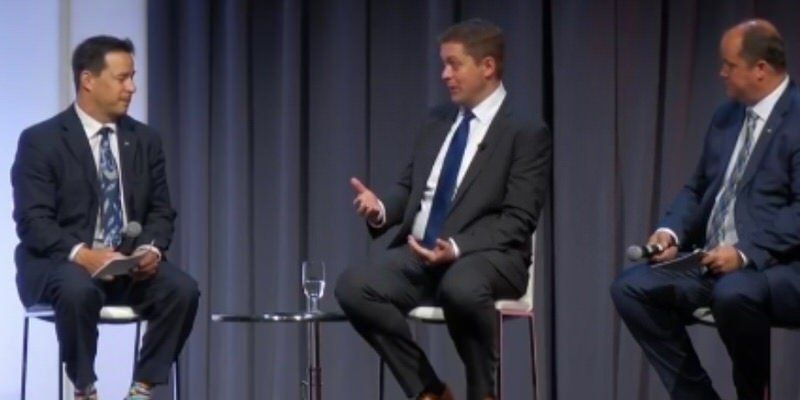
A Conservative win in the October federal election would mean an end to stress testing mortgage switches, as well as additional measures aimed at improving housing affordability.
Conservative Party leader Andrew Scheer made that promise on Friday while speaking to the Canadian Home Builders’ Association (CHBA).
“Housing affordability has become a critical issue across the country, and one that has reached crisis levels in bigger cities like Toronto and Vancouver,” he said. “Government policies and never-ending tax hikes have pushed the dream of homeownership further away by making it harder to qualify for mortgages.”
He noted that the stress test on uninsured mortgages introduced by the Liberal government last year has had “some major unintended consequences” and that his party is “absolutely committed to reviewing it.”
But one thing is certain—a Conservative win would mean the end of stress testing mortgage switches. The stress test currently applies to mortgage renewals if a borrower decides to switch lenders, usually to get a better rate, whereas they don’t face the stress test if they remain with their existing lender.
“That has the consequence of the bank that you’re with kind of having you over the barrel,” Scheer said. “I don’t see the public policy goal that that achieves…that’s something that we’re committed to removing.”
He added that bringing back 30-year amortizations on insured mortgages is also “something we’re absolutely looking at.” The last time 30-year amortizations were available on insured mortgages was in 2012, before they were shortened to 25 years by OSFI.
Scheer criticized the current government’s policy changes as unfairly “choking off” access for first-time buyers who have the ability to pay and meet their monthly obligations.
As a result, he says many have been forced to turn to private equity firms that charge higher rates. “If you’re looking at how the government policy has had an impact on Canadians… it’s making them pay higher interest fees on borrowing because they’ve been moved to one of those private firms.”
Need to Address the Supply Side
The Conservatives’ approach to addressing affordability would not just focus on the demand side of the equation, such as mortgage qualifications and down payments, Scheer said.
“We need to address the supply side as well. That means we need to make it easier for people like you to build more homes,” he told the CHBA. He promised to work with provincial and municipal partners to “address processes, red tape, timelines, and explore ways to facilitate bringing more housing units on the market to bring down costs.”
He cited a C.D. Howe Institute report on barriers to housing that calculated the extra costs on single-detached housing due to excessive regulation now runs in the six-figures. “We need to bring those regulatory burdens down.”
This article was written by Steve Huebl and originally published on the Canadian Mortgage Trendswebsite on May 13th, 2019. Republished with permission.