
No Rate Change By Bank of Canada
Bank of Canada holds rates steady for the third straight month but signals that rate hikes are coming, likely as soon as the next meeting in July.
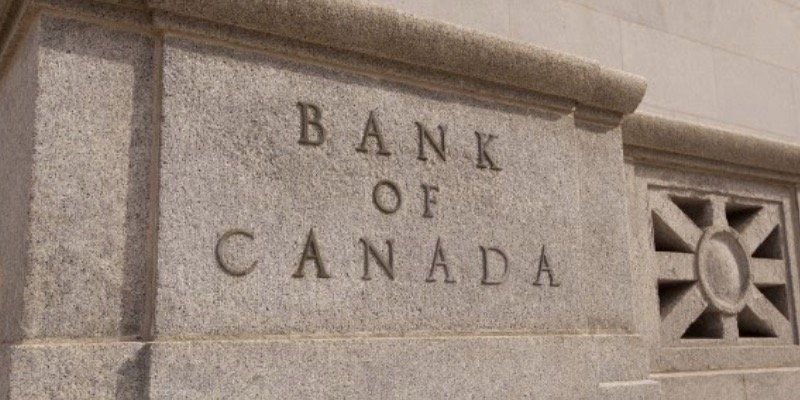
Poloz Opens The Door For A Rate Hike In July
As expected, the Bank of Canada held rates steady at 1.25% for the third consecutive month but said that first-quarter growth was stronger than expected and that developments since April suggest that higher interest rates are will be warranted. The first quarter GDP numbers are out tomorrow morning, and it’s clear they Q1 growth will be above the 1.3% figure the Bank projected in the April Monetary Policy Report. This opens the door for a rate hike possibly as soon as the next meeting on July 11. The Canadian dollar rallied on this news as many feared that the Bank was behind the curve in responding to a recent rise in overall inflation–induced by higher gasoline prices–and very tight labour markets.
Uncertainty remains on the NAFTA front, dampening global business investment. Canadian firms long for a bright and stable resolution of trade conflicts with the U.S., which continues to be elusive. Business investment picked up in the first quarter and the Business Outlook Survey released in late June will give the central bank a window on business intentions before the next policy meeting.
Concerning the housing market, the Bank’s press release noted that “Housing resale activity has remained soft into the second quarter, as the housing market continues to adjust to new mortgage guidelines and higher borrowing rates. Going forward, solid labour income growth supports the expectation that housing activity will pick up and consumption will continue to contribute importantly to growth in 2018.”
Not everyone shares this optimism. The past week’s bank earnings releases show that mortgage originations have slowed considerably from year-ago levels and some have suggested that weak activity will prevail for the rest of the year. The posted mortgage-rate, which is used to qualify borrowers, has risen to 5.34%, making it more difficult for some to gain approval, particularly at the federally regulated lenders. Variable mortgage rates are much lower as the gap between fixed and floating rates has hit historical highs.
Bottom Line: The central bank statement was much more hawkish than expected suggesting we are on target for a rate hike in July and another one is likely in October as well. The Bank of Canada raised rates three times since the middle of last year as the economy moved closer to full capacity. But the Bank has been in a holding pattern since January cautiously waiting to see the results of trade negotiations and the degree of the slowdown in housing. These factors will determine the pace of future rate hikes with the Bank estimating its neutral rate is 3%, more than double the current overnight rate. The Bank will only very gradually approach that level, mindful of the impact on an overly indebted household sector.
The Official Announcement
The Bank of Canada today maintained its target for the overnight rate at 1¼ per cent. The Bank Rate is correspondingly 1½ per cent and the deposit rate is 1 per cent.
Global economic activity remains broadly on track with the Bank’s April Monetary Policy Report (MPR ) forecast. Recent data point to some upside to the outlook for the US economy. At the same time, ongoing uncertainty about trade policies is dampening global business investment and stresses are developing in some emerging market economies. Global oil prices have been higher than assumed in April, in part reflecting geopolitical developments.
Inflation in Canada has been close to the 2 per cent target and will likely be a bit higher in the near term than forecast in April, largely because of recent increases in gasoline prices. Core measures of inflation remain near 2 per cent, consistent with an economy operating close to potential. As usual, the Bank will look through the transitory impact of fluctuations in gasoline prices.
In Canada, economic data since the April MPR have, on balance, supported the Bank’s outlook for growth around 2 per cent in the first half of 2018. Activity in the first quarter appears to have been a little stronger than projected. Exports of goods were more robust than forecast, and data on imports of machinery and equipment suggest continued recovery in investment. Housing resale activity has remained soft into the second quarter, as the housing market continues to adjust to new mortgage guidelines and higher borrowing rates. Going forward, solid labour income growth supports the expectation that housing activity will pick up and consumption will continue to contribute importantly to growth in 2018.
Overall, developments since April further reinforce Governing Council’s view that higher interest rates will be warranted to keep inflation near target. Governing Council will take a gradual approach to policy adjustments, guided by incoming data. In particular, the Bank will continue to assess the economy’s sensitivity to interest rate movements and the evolution of economic capacity.
This was the fourth announcement in 2018, here are the announcements dates set out for the remainder of 2018.
- July 11th 2018*
- September 5th 2018
- October 24th 2018*
- December 5th 2018
*Monetary Policy Report published
The article “Poloz Opens The Door For A Rate Hike In July” was written by Dr. Sherry Cooper DLC’s Chief Economist. The bank announcement was shared from the government website with permission.