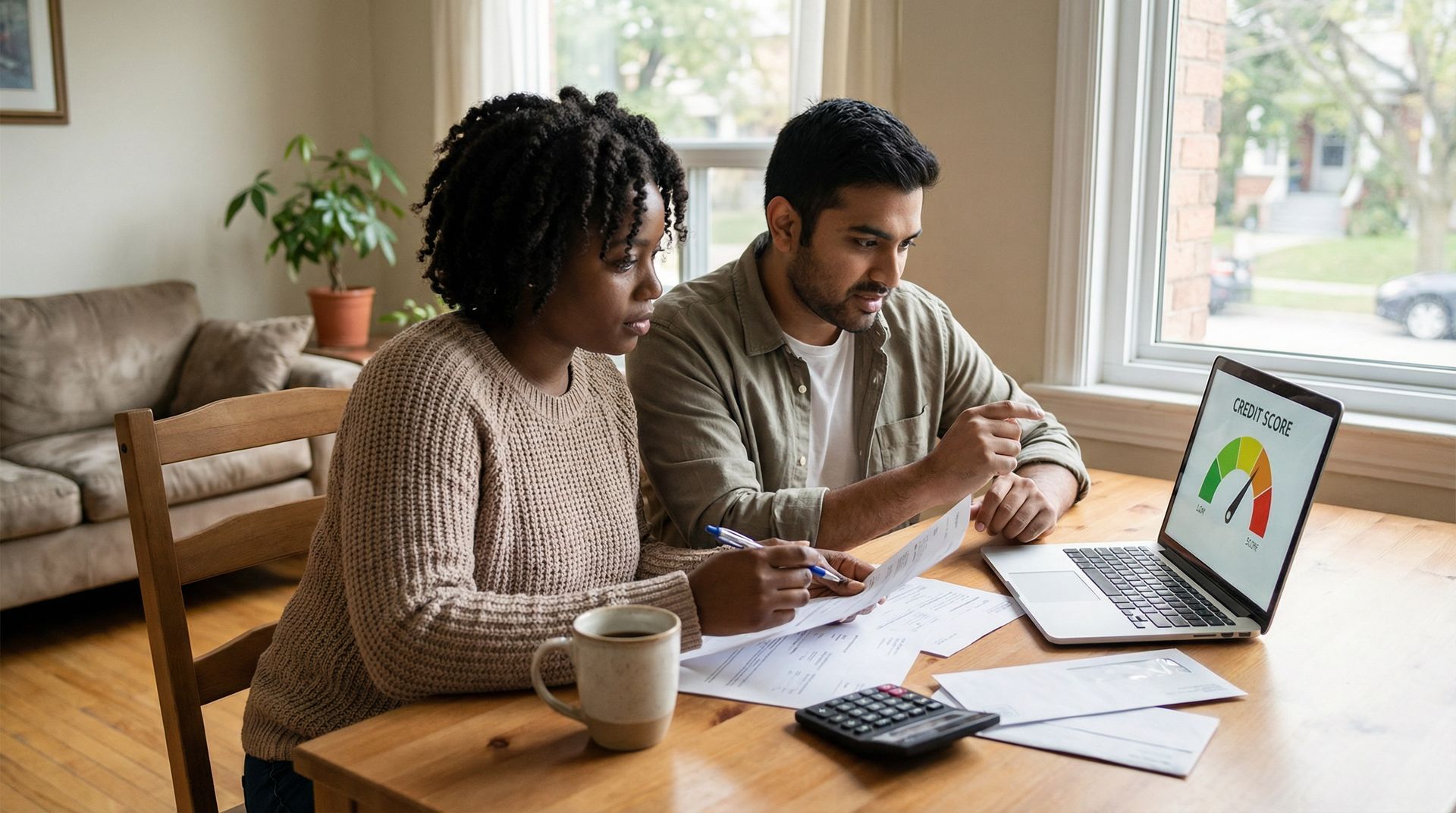
Is Co-Ownership Right for Me?
As property prices continue to rise across Canada, the conversation around “how to climb the property ladder” has made a subtle shift to “how to get on the property ladder in the first place.”

Especially if you’re single. Whereas before it was assumed anyone would qualify to buy a starter home (or condo), nowadays with increased housing prices and the government making it tougher to qualify for a mortgage through a financial stress test, becoming a homeowner isn’t a walk in the park. Qualifying for a mortgage on a single income is becoming increasingly difficult.
Unfortunately, just because you have a proven ability to pay rent on time doesn’t mean you will qualify to make mortgage payments in the same amount. So if you are looking to get into the housing market, but don’t qualify on your own, maybe you should consider co-ownership as an option!
So what is co-ownership anyway? Well, co-ownership is when more than one applicant takes on the financial responsibility of owning a property together. Co-ownership can take on many forms. Obviously owning a home with your spouse or life partner is the most common form of co-ownership, while having your parents co-sign on a mortgage is another. But for the sake of this article, let’s think past these arrangements. Did you know that there are really no limitations with whom you can purchase a property? This is assuming they meet the lending criteria.
Maybe a brother, sister, cousin, neighbour, co-worker, friend, your mechanic, financial advisor, or some distant relative just happens to be looking to get into the housing market as well? There is a good chance that by combining your incomes together, you will qualify for a mortgage that neither of you would qualify on your own. Bringing someone else into the picture, or even a group of people, can significantly increase the amount you qualify to borrow on a mortgage. Most lenders will accept up to four applicants on a mortgage, while some lenders have even gone as far as launching products designed to make buying with friends and family easier.
Buying a property with someone(s) in a co-ownership arrangement is becoming way more commonplace.
However, before making the decision to buy a house with someone, there is no doubt going to be a list of things you are going to want to work through. You will want to get everything out in the open and ask yourself questions like…
- Do I trust this person?
- Can I live with this person?
- Am I comfortable making decisions about the home with this person?
- How will conflict be managed when it arises?
- What happens if either party runs into financial trouble?
- What is the exit plan?
The more you work through ahead of time, the better chance you have at successfully co-owning a house with someone. A lot of people who purchase a property in a co-ownership agreement treat it like a business arrangement.
Now, of course we aren’t able to tell you if co-ownership is going to be a good fit for you, but any of our Canadian Mortgage Experts will be able to walk you through the process step by step and get you (and your partner in real estate) the best mortgage available to you! Contact us anytime!